CallPal
The short answer: no outbound calling platform has a contact rate of its own. The share of people who pick up is decided mostly by who is on the list, what the caller ID looks like on their screen, when you call, and how many times you try. A platform matters where it touches those four things, and a number on a vendor’s homepage tells you about their customers’ lists, not about yours.
So the useful question is not which platform "delivers" the highest rate. It is which of the levers below your current setup gets wrong, and whether a different tool would fix that lever or just report it more prettily.
First, agree on what you are measuring
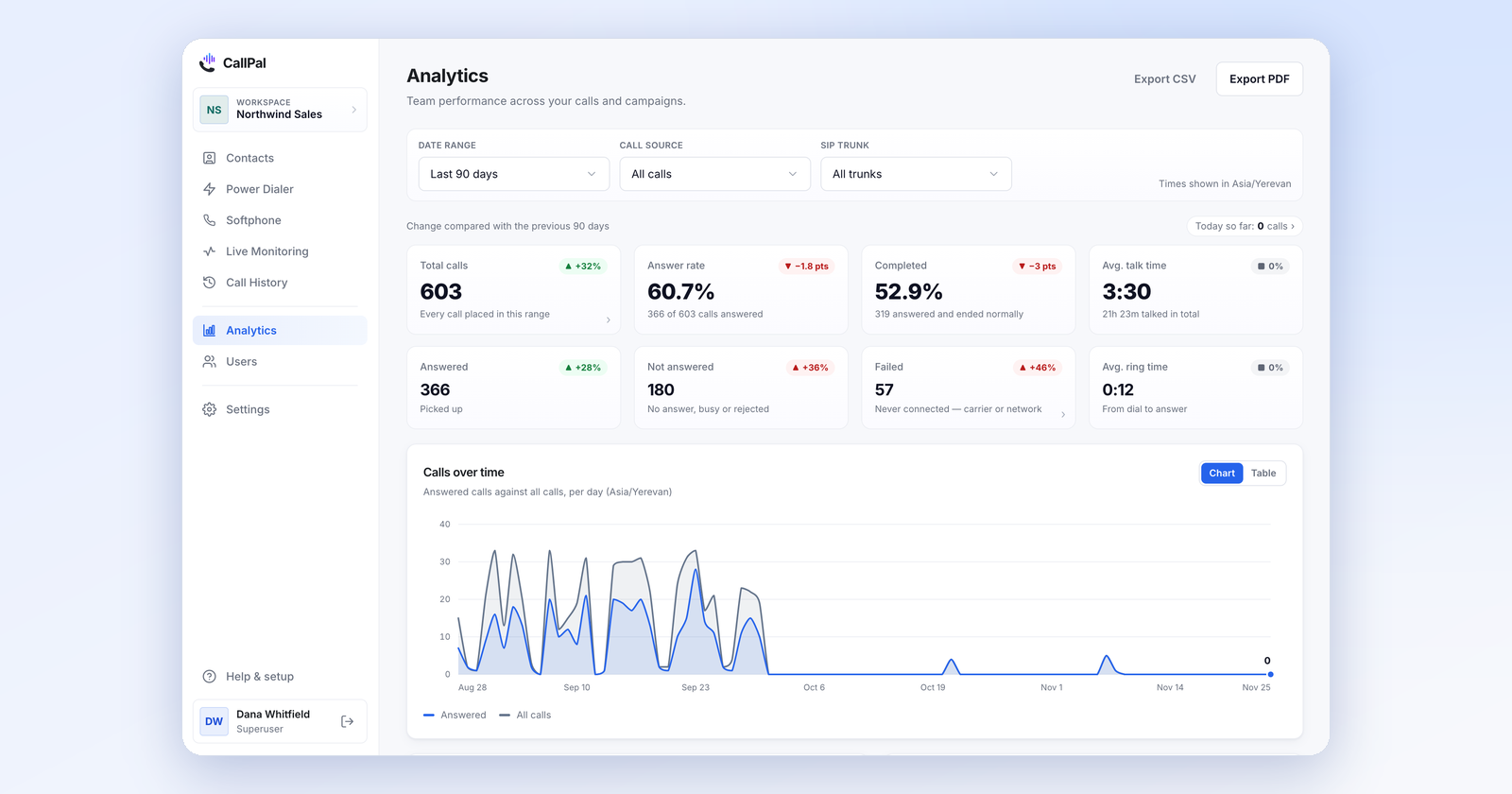
Three numbers get called "contact rate", and comparing two of them is how a vendor’s figure ends up looking twice as good as yours.
| Metric | How it is counted | What moves it |
|---|---|---|
| Answer rate (connect rate) | Answered calls ÷ all dials | List quality, caller ID, timing |
| Contact rate | People reached ÷ people attempted, over a period | All of the above, plus how often you retry |
| Conversations per hour | Live conversations ÷ hours on the phone | Dialing mode as much as anything else |
The third one is where most "highest contact rate" claims come from. A parallel dialer rings several numbers at once, so it produces more conversations per hour from the same list. It does not make any one person more likely to answer, and the people who answer second get dropped. Our outbound sales KPI guide defines each metric and how to read it.
The six levers, in the order they usually matter
1. The list
Wrong numbers, switchboards, numbers saved in the wrong format and the same person three times all count as dials nobody could answer. Before changing anything else, clean the list: put every number in one international format, remove duplicates, and drop contacts with no direct line. The phone number formatter and the duplicate remover do both in the browser, without uploading the list anywhere.
If your data vendor sells mobile numbers separately, do not assume they are worth the extra cost. Tag each number as mobile or office line, measure answer rate by type for two weeks, and buy more of whichever your own list answers.
2. The caller ID the other person sees
A call labelled "Spam Likely", or one from an unknown number in another country, is often ignored before it rings twice. What helps: a company number on every call, not a rep’s mobile; calls signed by your carrier through STIR/SHAKEN in the US; numbers registered with the call-analytics companies through the free Free Caller Registry; and volume spread over several numbers instead of piled onto one. The Spam Likely risk checker scores a number against those habits.
A local number helps when the people you call recognise the area code. It is not a trick that works forever. If the calling pattern behind it looks like spam, the local number gets labelled too.
3. When you call
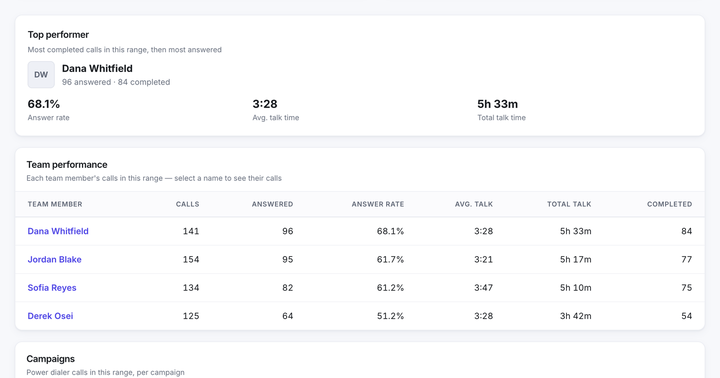
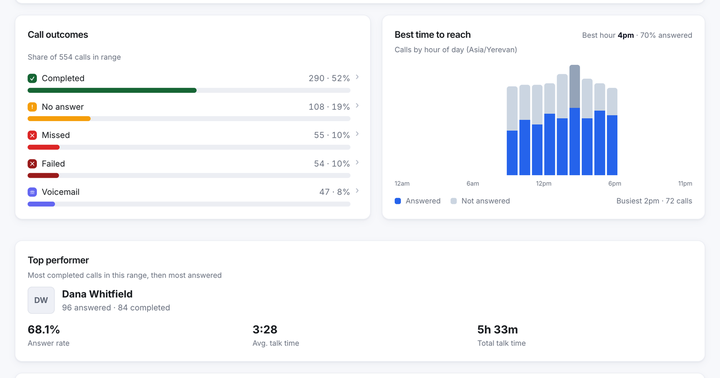
Published "best hour" studies disagree with each other, because every audience keeps different hours. The reliable method is your own data: spread dials across the day for two weeks, then compare answer rate by hour in the contact’s time zone. Our best time to make sales calls guide walks through it, and the time zone call sheet splits a list into hourly blocks by local time.
4. How many times you try
Many people are not reached on the first dial. Contact rate rises with each attempt and then flattens, and past that point you are spending dials and caller-ID reputation on people who will never answer. Measure the median attempts to first contact on your own list and set a stop rule a little beyond it. Vary the time of day between attempts instead of calling at the same hour every day.
5. How the call starts
With a predictive or parallel dialer, the person who answers can hear a pause, or nothing at all, while the system finds a free rep. People learn that pattern and hang up on it, which slowly lowers the answer rate the dialer was bought to raise. A power dialer places one call per rep, so the rep is already on the line when someone picks up. Power dialer vs predictive dialer covers the trade in detail.
6. Whether the call is wanted at all
Calling people who asked not to be called is the fastest way to collect spam reports. Keep a do-not-call list that every dial is checked against, honour requests the same day, and scrub against the national registries that apply where you call. The do-not-call compliance checklist covers the US rules.
What a platform can and cannot change
| Lever | The platform can | Only you can |
|---|---|---|
| List | Import, deduplicate and format numbers | Choose who goes on the list |
| Caller ID | Force a company number, spread calls across numbers, match area codes | Register numbers, verify with your carrier |
| Timing | Show the contact’s local time, block calls outside set hours | Pick the hours from your own results |
| Attempts | Track attempts and outcomes per contact | Set the stop rule |
| Call start | Place one call per rep, or several | Decide which trade you accept |
| Consent | Check a do-not-call list on every dial | Collect and honour consent |
When you compare platforms, ask each one which cells in the middle column it actually does, and ask to see it in the trial. A dashboard that reports a low answer rate is useful. A dialer that quietly calls everyone from the same number is the reason the rate is low.
A two-week test that tells you something
- Pick one list and clean it first, so the test measures the dialing and not the data.
- Keep the reps, the script and the hours the same across both weeks.
- In week one, change one thing only, for example spreading calls across several numbers.
- Compare answer rate and contact rate between the two weeks, by hour and by number.
- Keep the change if it moved the rate, then test the next lever.
One change at a time is slow, and it is the only way to know which change worked. Changing the dialer, the list and the hours at once gives you a new number and no idea why it moved.
Where CallPal fits
CallPal is a power dialer that runs on your own SIP carrier, so it covers the platform side of several levers. Every call shows a company number from your trunk, never a rep’s own. With several numbers on a trunk, it picks the one whose leading digits best match the number called, and among equal matches the one carrying the fewest calls right now. Each contact shows their local time before the call, wherever the number’s prefix points to a single time zone, campaigns stop outside the calling hours you set, and a do-not-call list is checked on every dial. Calls are one per rep, so nobody answers into silence.
What it does not do: CallPal does not supply contact data or phone numbers, does not scrub against national do-not-call registries for you, and calling hours are set in one time zone for the whole workspace rather than per contact. Your carrier decides STIR/SHAKEN attestation, because the calls go out over your carrier account.